Understanding Model United Nations (MUN)
Welcome to this interactive guide to Model United Nations! Join Panagiotis Domvros, President of PyleaMUN, alongside Vangelis, Eleftheria, and Nikos, as they explain the core workings of an MUN conference in a concise and easy-to-understand way for newcomers.
 Mr. Domvros: Nikos, let's start with the very beginning: Roll Call.
 Thanks, Mr. Domvros! So, Roll Call is the very first step within an MUN conference. It's basically the chairs listing which nations are present and which nations are not, just like in a high school classroom where your teacher will list who is present and who is not. But in the MUN conference, there are a few minor details that you really need to focus upon. So when the chairs call on your nation's name, for example, 'the delegate of South Africa,' you must raise your placard first. You can put it down afterwards.
 Then, you will have to respond with one of two answers, and these two answers are up to you. The first choice is: 'The delegate of South Africa is present.' The second choice is: 'The delegate of South Africa is present and voting.'
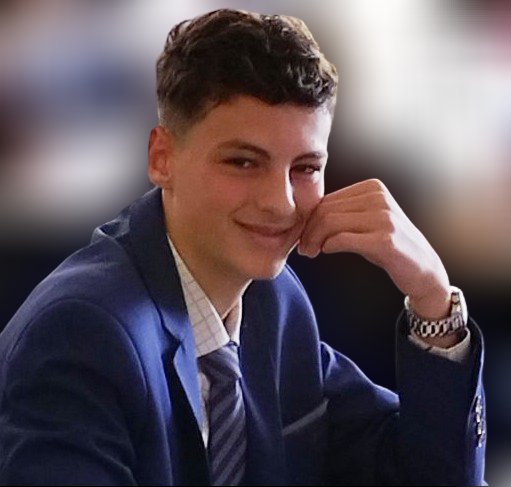 So what's the difference between these two answers? When you choose 'present' only, this means you have the right to abstain, or to not vote, during the voting procedures, including for the draft resolution later on. But if you choose 'present and voting,' this means you have a strong will and a strong commitment to always vote Yes or No during every single voting procedure. If you choose 'present and voting,' you have to vote. You must vote. But if you only choose 'present,' then you have the right not to intervene in the voting itself.
Mr. Domvros: Eleftheria, what are "Points" in MUN, and how do they help delegates?
Points are ways delegates can address specific needs or issues during the conference. There are three important points that you must remember. The first is the Point of Personal Privilege. This is, in simple terms, a way to help you if you want to go to the toilet, if you feel uncomfortable, or if you feel sick during the conference. What you need to do is raise your placard and say, 'The delegate of, let's say for example, the United States of America, would like to raise a point of personal privilege'. Afterwards, you will have to say the reason for the privilege itself. If the point was raised in order for you to use the restroom, it cannot interrupt the speaker or the voting procedure. However, you may interrupt the speaker only if you want them to speak louder, more clearly, or more slowly.
Next is called the Point of Order. When you raise your placard and say, 'The delegate of the United States of America would like to raise a point of order,' this means you're notifying and reminding the chairs that they have missed a step within the MUN process itself. It's going to be really confusing if you don't ask or remind the chairs regarding their misstep, so don't forget to raise a point of order if you think the conference itself is a little confusing or out of step.
The next point, and the last, is the Point of Information. This is where you raise a point to increase your proactivity and curiosity within the conference. After a speaker has finished their speech and has opened themselves up to points of information, you may raise your placard, and after being recognised by the Chair, you may ask the speaker any questions you have about the speech they just made or any questions regarding the topic at hand. But be careful — you can only ask one question at a time.
Mr. Domvros: Nikos, can you tell us about the different types of motions delegates will encounter?
Certainly, Mr. Domvros! In PyleaMUN, delegates will encounter several important motions during debate. The first and most common is the motion to move into debate on a resolution or amendment. This happens when the Chair asks, “Are there any motions on the floor?” — inviting delegates to suggest how the committee should proceed, such as starting debate, extending debate time, or moving to voting.
That’s right. When debate begins, it is usually conducted in closed debate, meaning the time is divided between speeches in favour of and against the resolution or amendment. Delegates may also move for open debate, where anyone can take the floor regardless of their position. Each speaker is given a set speaking time, usually one to two minutes, decided by the Chair at the start of debate.
In PyleaMUN, delegates have lobbying sessions, which usually take place before formal debate begins. During lobbying, delegates informally discuss ideas, form alliances, and merge or draft resolutions together. This stage is crucial for creating effective and well-supported draft resolutions before submitting them to the Approval Panel.
Mr. Domvros: Forming alliances sounds important! That leads us to a key outcome of the conference: the Draft Resolution. What exactly is a Draft Resolution?
A draft resolution is basically a sheet of paper that contains all the strategies and solutions your alliance has created in order to counter or solve the problem being discussed. Whether it's to solve climate change, terrorism, or child safety, your job is to list as many solutions as possible to find a real resolution to the problem itself. But you must remember that there has to be a deeper, more complete and precise structure, and you must follow the structure if you want to win.
Alright, let's get to the structure. You start with your committee's name, whether it's UNHCR, UNICEF, or UNESCO. Afterwards, you go to the part of the signatories and the sponsors. The sponsors are listed above the signatories and are the nations that took part in writing or typing the draft resolution. Afterwards, you write the signatory section. These are the names of the countries that did not take part in the writing or typing but were part of the discussions and arguments.
Afterwards, you must write all the problems to identify why this topic is so concerning. First, you write the topic. Then, you write in dot points why this issue is concerning, what this nation has been suffering from, and what are the critical points regarding the topic. Afterwards, this is the final piece of the cake. You just need to remember: you write again in dot points the resolutions, the solutions. For example, suggests the establishment of NGOs. You must have at least five solutions regarding the topic.
Mr. Domvros: That's a thorough explanation of the Draft Resolution! Now, speaking of getting ready, how does one prepare for an MUN conference?
Preparing for an MUN conference involves a few key steps to ensure you're ready to represent your assigned nation effectively. First, you'll need to research your assigned country's foreign policy and its stance on the specific topics being discussed at the conference. This involves understanding their history, economy, political system, and their relationships with other countries.
Exactly! Once you have a good grasp of your country's general position, you'll delve deeper into the specific agenda topics. Research the issues thoroughly, looking at different perspectives, existing international agreements, and potential solutions. This will help you formulate your nation's viewpoint and prepare for debates.
Mr. Domvros: Will a country profile help with that preparation?
Absolutely, a country profile is extremely helpful! It's essentially a summary of your assigned nation, encompassing its history, economic situation, political structure, and its relationships with other countries.
Think of it as your nation's resume. Having a solid country profile allows you to understand why your nation holds certain views on global issues and helps you anticipate how they might react in a debate. It's foundational to representing your country authentically.
Mr. Domvros: Will I have to prepare some papers for the conference?
Yes, you will! The main paper you'll need to prepare is called a position paper. Your position paper outlines your country's stance on the topics being discussed in the conference. It's where you present your nation's viewpoint on the problems and the solutions you propose. Think of it as a formal statement of your country's policies.
Mr. Domvros: Is there anything else that a delegate should consider or prepare for?
Yes! Beyond the formal papers and research, delegates should definitely focus on public speaking skills. You'll be presenting your country's views, participating in debates, and explaining your draft resolution, so being able to articulate your thoughts clearly and confidently is key.
Building on that, negotiation and diplomacy skills are incredibly important. Remember the Unmoderated Caucus where you form alliances and blocks? That's where your ability to persuade, compromise, and build consensus with other delegates really comes into play to create a strong draft resolution.
And finally, active listening and critical thinking. During debates and caucuses, you need to listen carefully to what other delegates are saying, understand their positions, and then formulate your responses and strategies accordingly. This helps you identify common ground for alliances or points of disagreement that you need to address.
Mr. Domvros: And lastly, will it help me to go through the PyleaMUN site (pyleamun.gr) for preparation?
Absolutely! The PyleaMUN website, pyleamun.gr, will be an invaluable resource for your preparation. It's likely to contain specific details about the upcoming conference.
Exactly! You'll probably find the conference agenda, committee topics, assigned countries, and perhaps even example position papers or rules of procedure. It's the official source for all the logistics and unique aspects of our PyleaMUN conference. You should definitely explore it thoroughly!
I hope this overview has made the MUN process much clearer for all of you. Model United Nations is a fantastic opportunity to learn, debate, and collaborate, and we encourage you all to participate! Thank you, Vangelis, Eleftheria and Nikos, for these excellent explanations.
You're welcome!